10 Marla Makan Ka Naksha — Ghar Ka Naksha, House Layout & 35×70 Elevation
10 Marla Ghar Ka Naksha, Makan Ka Naksha and Plot Ka Naksha
Whenever a family in Pakistan starts thinking seriously about building their own home, the first question that comes up is what a good 10 marla makan ka naksha should actually look like — one that looks good on paper and feels comfortable to live in every single day. Most people plan a naksha just to fit in the required number of rooms, but a genuinely good 10 marla ghar ka naksha thinks far beyond that — where each room sits, which path a guest takes, which path the family uses on a normal day, and how air and light move through the house from morning to night.
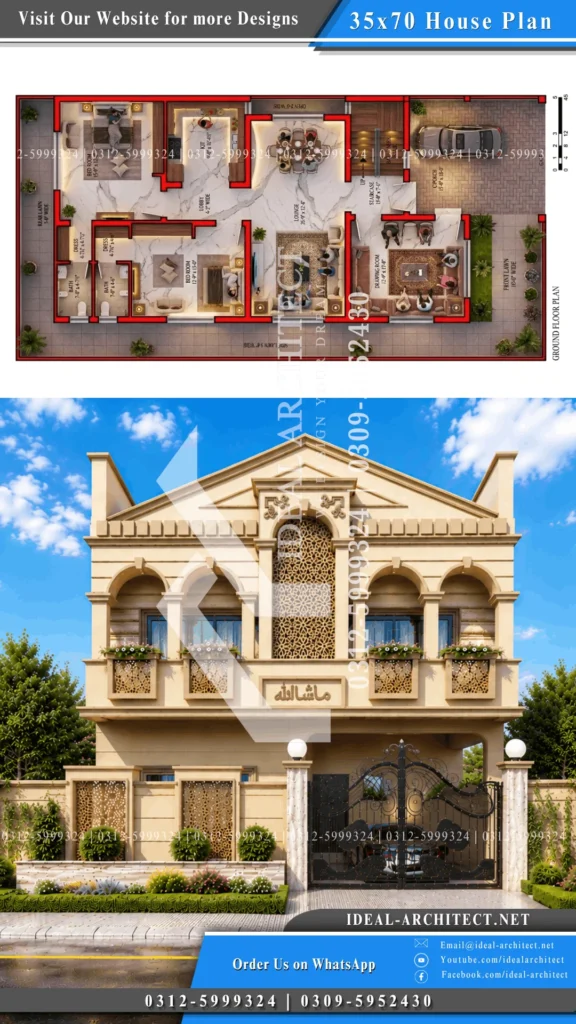
This 10 marla plot ka naksha is built around exactly that kind of thinking. The full depth of the plot has been used so that the guest zone and the private family zone stay completely separate — nobody has to walk through someone else’s space to reach their own. From the front gate to the rear lawn, every corner of the plot has a clear purpose.
The boundary wall and gate are part of this home naksha 10 marla, not an afterthought tacked on separately. The gate’s profile follows the same design language as the main elevation, and simple globe light fixtures sit on stone-textured columns on either side, lighting up the driveway clearly at night. The boundary wall carries recessed niches and horizontal grooves so a long wall never feels flat or boring, and climbing plants and seasonal flowers along it soften the whole frontage naturally.
The overall character of this naqsha house 10 marla sits comfortably between formal and warm — not too plain, not too heavily decorated. From the front lawn all the way to the rear boundary, every zone earns its place, whether that’s buffering street noise, welcoming guests, or giving the family its own quiet corner.
10 Marla House Naksha and House Naqsha — Room Zoning
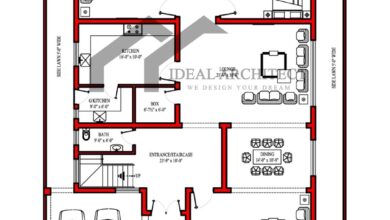
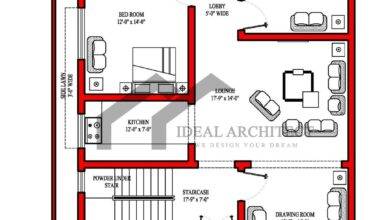
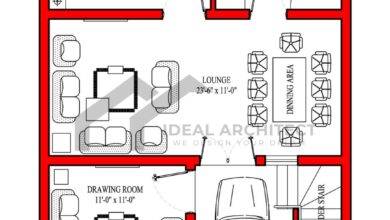
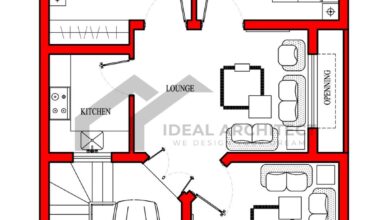
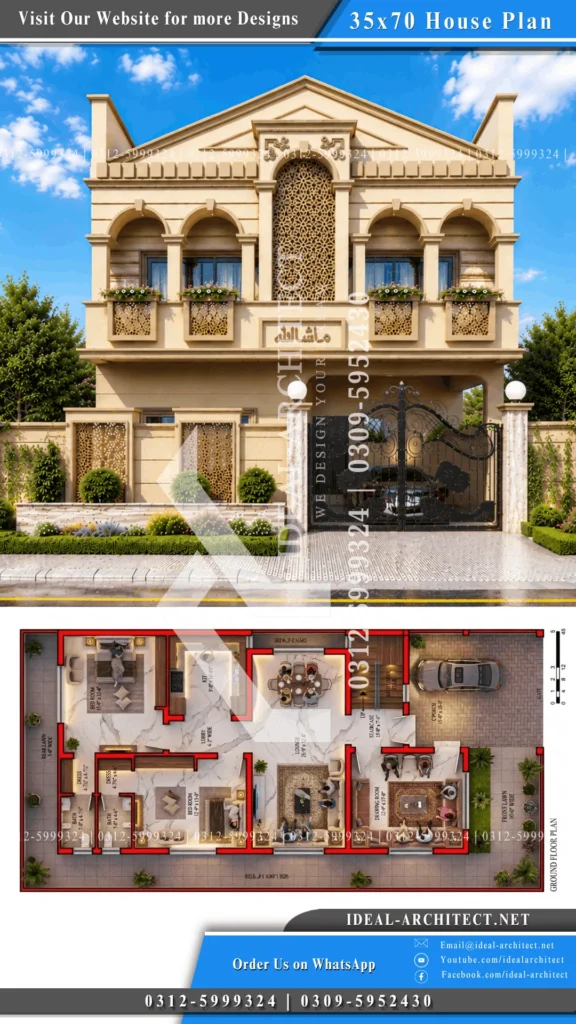
Now let’s talk about where the rooms actually sit, because this is what makes any 10 marla house naksha either easy or difficult to live in day after day. Right from the 18-foot-wide entrance gate, the layout splits into two separate paths — one for guests, one for family — and these two paths never cross each other.
On the right sits the car porch, wide enough to comfortably park two vehicles with full room for doors to open. On the left, the front lawn isn’t there just to look nice — it acts as a genuine buffer that cuts down street noise and gives the drawing room windows a calm, green view. In this 10 marla house naqsha, guests move straight from the porch into the drawing room through its own independent entrance, without ever passing through the family lounge. Family members take the other route, through the staircase lobby into the central lounge. This separation is exactly what makes daily life manageable, especially in households where guests visit often.
The lounge is the heart of this 10 marla plot naqsha — wide enough for a full seating arrangement, lit by a side courtyard, and connected to the dining room, kitchen and drawing room all at once. The dining room sits in a spot that’s equally reachable from the drawing room, lounge and kitchen. The kitchen has its own service door opening onto the side alley, so grocery deliveries or utility movement never need to pass through the dining or living spaces.
The rear zone holds two bedrooms designed purely for privacy, each with its own attached bathroom and a direct view of the rear lawn. This is the part of the house naksha 10 marla where the family spends most of its time, which is exactly why noise and foot traffic are kept to a minimum here.
Cross-ventilation is a key feature of this 10 marla house map — the front lawn, the side passage, an internal open shaft, and the rear lawn together form four separate zones that keep air and light moving through the entire house. Every room has a real window of its own; nothing depends on an exhaust fan as a substitute.
10 Marla House Plan and House Layout — From Bedrooms to the Ten Marla House Map
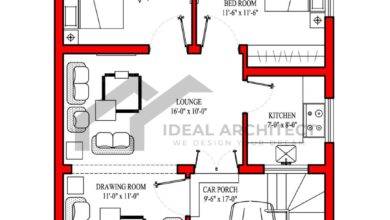
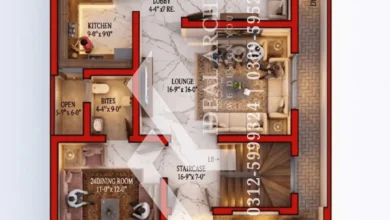
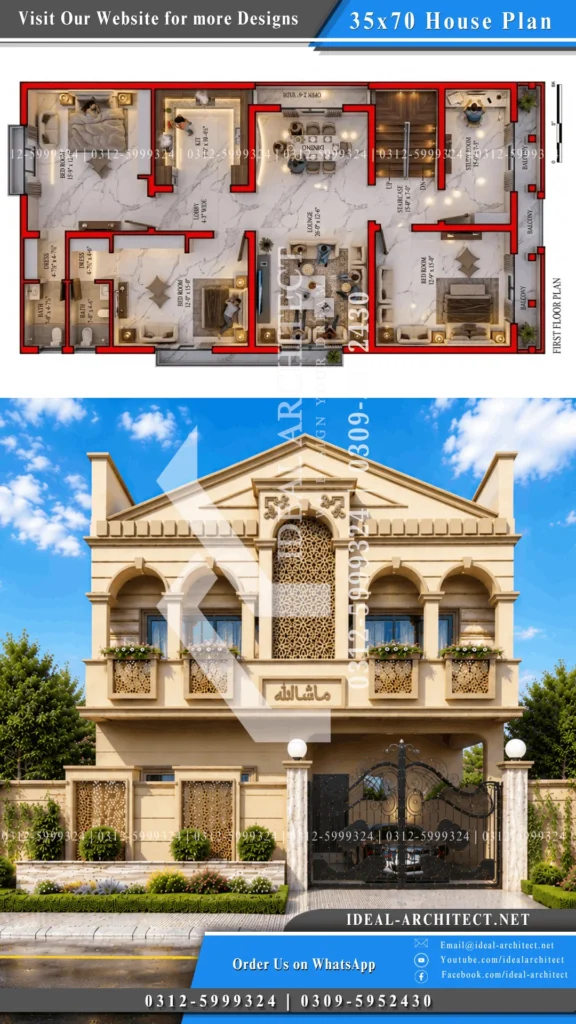
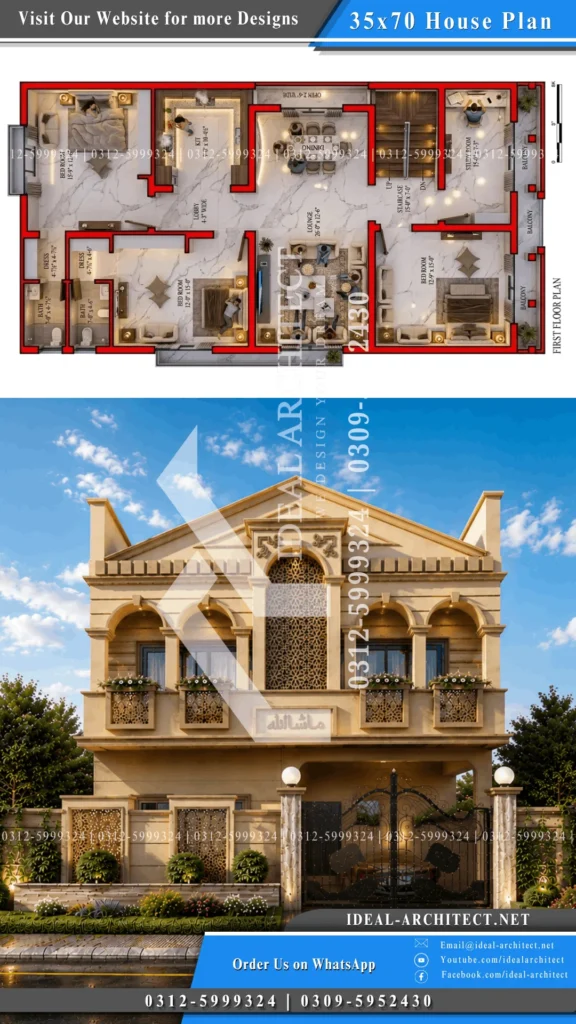
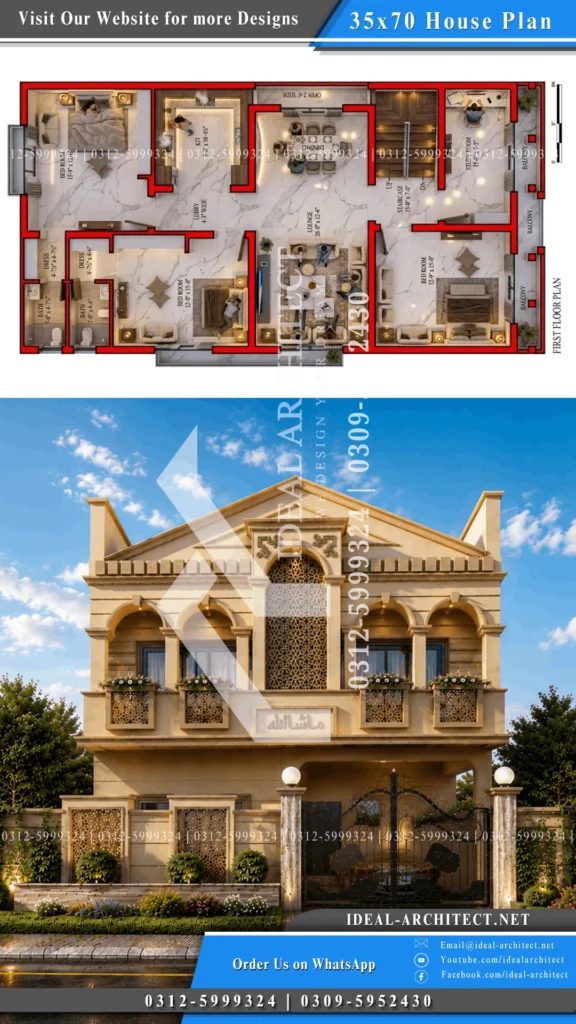
A genuinely good 10 marla house plan doesn’t stop at the ground floor — the upper floor carries just as much weight in the overall design. In this 10 marla house layout, the upper floor has been treated as a separate residential unit in its own right — its own kitchen, its own lounge, three of its own bedrooms, and an entrance independent of the ground floor.
The staircase sits right at the front, close to the porch, so anyone heading upstairs can go straight up without walking through the ground floor’s family space. It’s a small decision that makes a big difference — whether the upper floor is for extended family, for grown children, or for renting out.
The front bedroom upstairs has direct terrace access and catches the best morning light in the entire house, along with the most spacious attached bathroom on that level. The central lounge sits directly above the ground floor lounge — not just a design choice, but a structural one, since keeping load-bearing walls aligned across both floors removes the need for transfer beams.
The kitchen is also placed directly above the ground floor kitchen — plumbing lines run straight up, which cuts material cost and means future maintenance never involves cutting open a slab. A dedicated box room is included purely for storage, something that’s often missing entirely from typical Pakistani house designs.
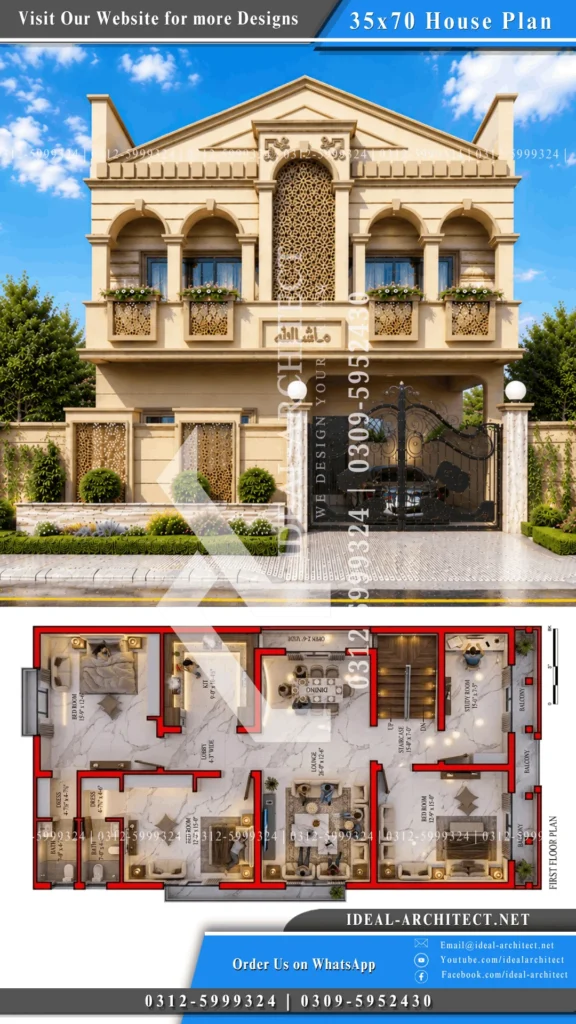
Two rear bedrooms — both with attached bathrooms, both looking out onto the rear lawn — complete this 4 bedroom 10 marla house plan. Add the two ground floor bedrooms to the three upstairs, and this full ten marla house map delivers five bedrooms across two fully independent floors, each with its own lounge and kitchen.
This is exactly what sets this 10 marla house map design apart from an ordinary naksha — every decision, whether it’s about plumbing, ventilation, or privacy, has a clear reason behind it.
Room Size Summary Table
| Room | Size | Location | Key Advantage |
|---|---|---|---|
| Car Porch | 19′-9″ × 18′-0″ | Front Right | Fits two vehicles, column-free |
| Front Lawn | 10′-0″ Wide | Front Left | Street noise buffer, curb appeal |
| Drawing Room | 13′-0″ × 14′-0″ | Front Left Corner | Independent guest access from porch |
| Staircase Lobby | 15′-9″ × 7′-0″ | Front Right | Independent upper floor access |
| Powder Room | Under stair | Front Right Lobby | Guest bathroom without entering bedroom zone |
| Dining Room | 13′-0″ × 9′-3″ | Mid Left | Close to both kitchen and lounge |
| Kitchen | 9′-0″ × 12′-0″ | Mid Left | U-shaped counter, separate alley door |
| Family Lounge | 15′-9″ × 16′-0″ | Central | Hub of the house, courtyard light |
| Left Bedroom | 13′-0″ × 14′-0″ | Rear Left | Dressing alcove, attached bath |
| Right Bedroom | 13′-0″ × 14′-0″ | Rear Right | Attached bath, rear lawn view |
| Front Bedroom (Upper) | 13′-0″ × 14′-0″ | Front Left | Terrace access, best morning light |
| Kitchen (Upper) | 9′-0″ × 12′-0″ | Mid Left | Directly above ground floor kitchen |
| Box Room (Upper) | 6′-0″ × 7′-7½” | Mid Left | Dedicated storage space |
| Rear Bedrooms (Upper, x2) | 13′-0″ × 14′-0″ each | Rear Left/Right | Attached bath, rear view, privacy |
35×70 House Plan, House Design and 10 Marla Front Elevation
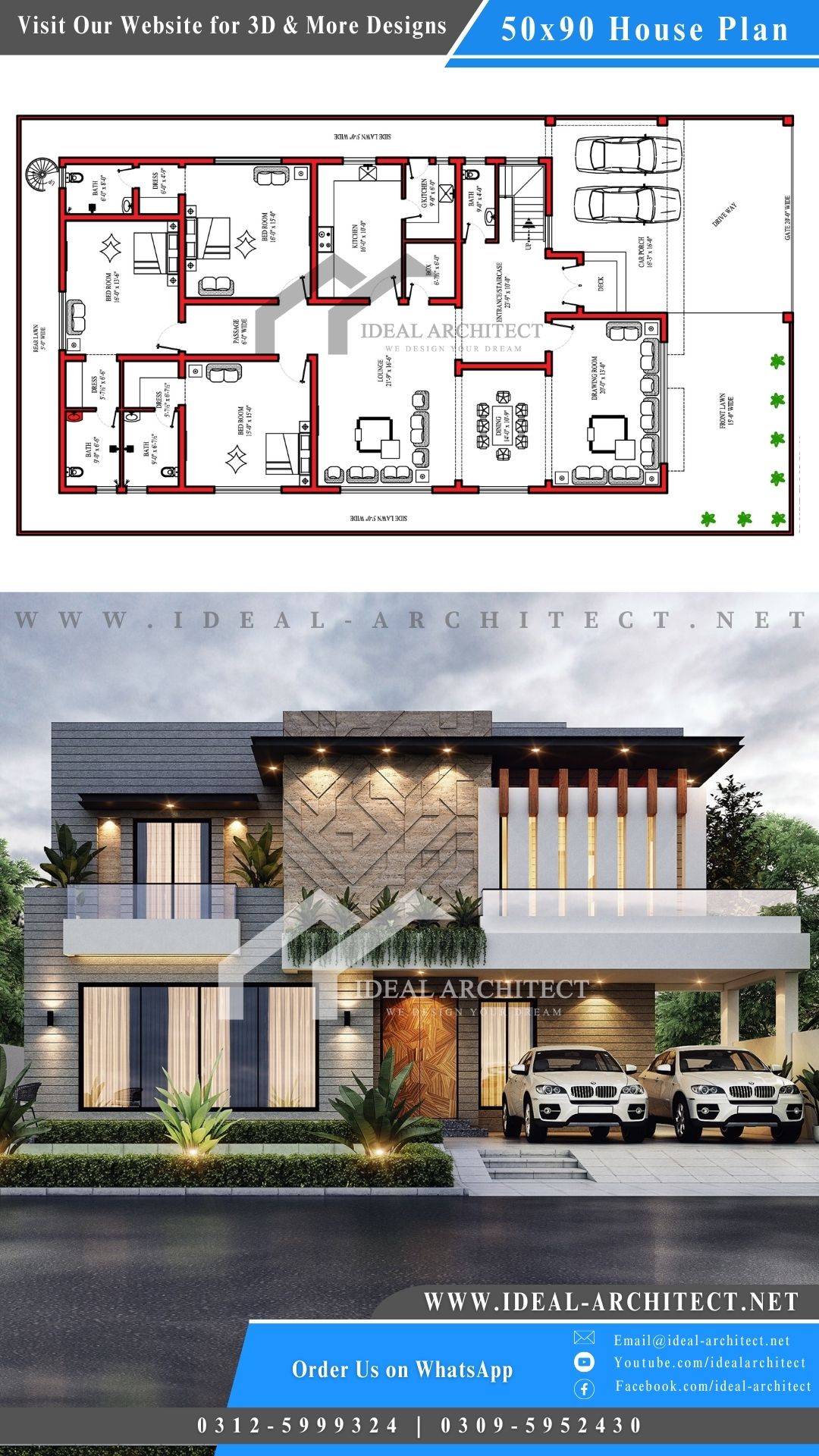
The plot size — 35×70 — is really what makes this whole zoning possible. A 35-foot width comfortably fits the car porch, front lawn and drawing room side by side, while a 70-foot depth pushes the private bedrooms far enough from the street that road noise, guest conversation, or front-door activity never reaches the rear of the house. That’s exactly why this 35×70 house plan has become one of the most popular footprints for double-storey construction across Pakistan.
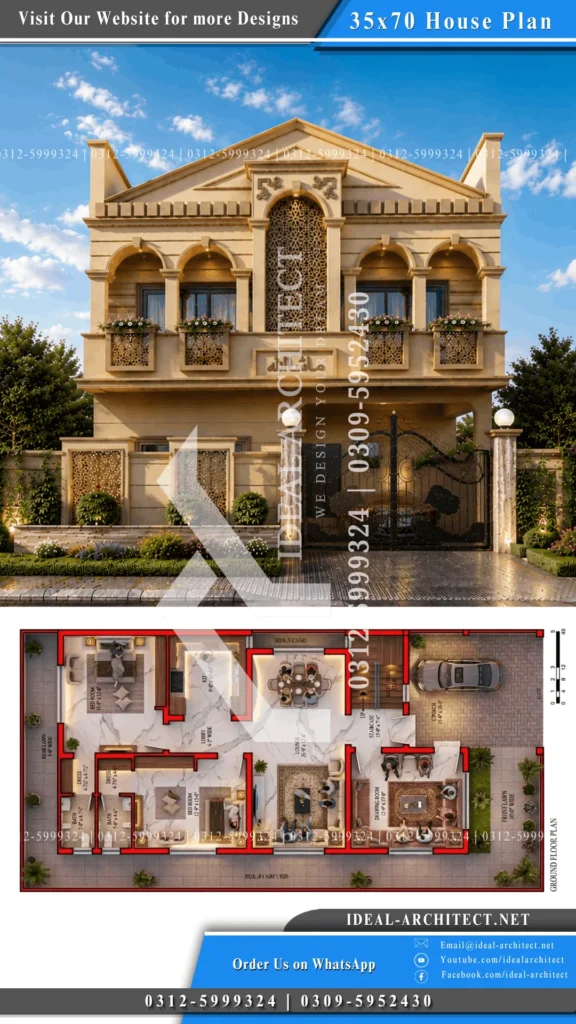
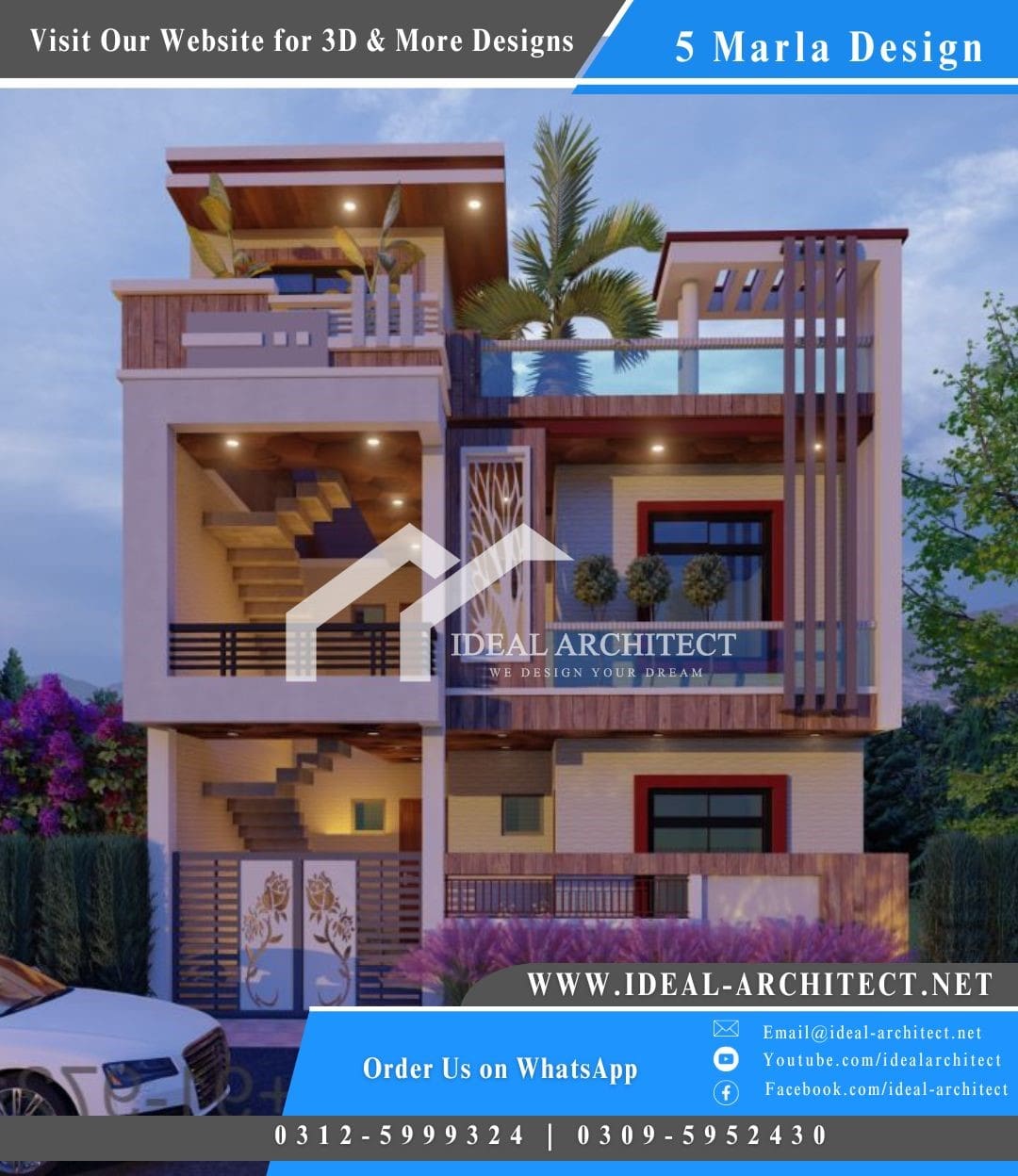
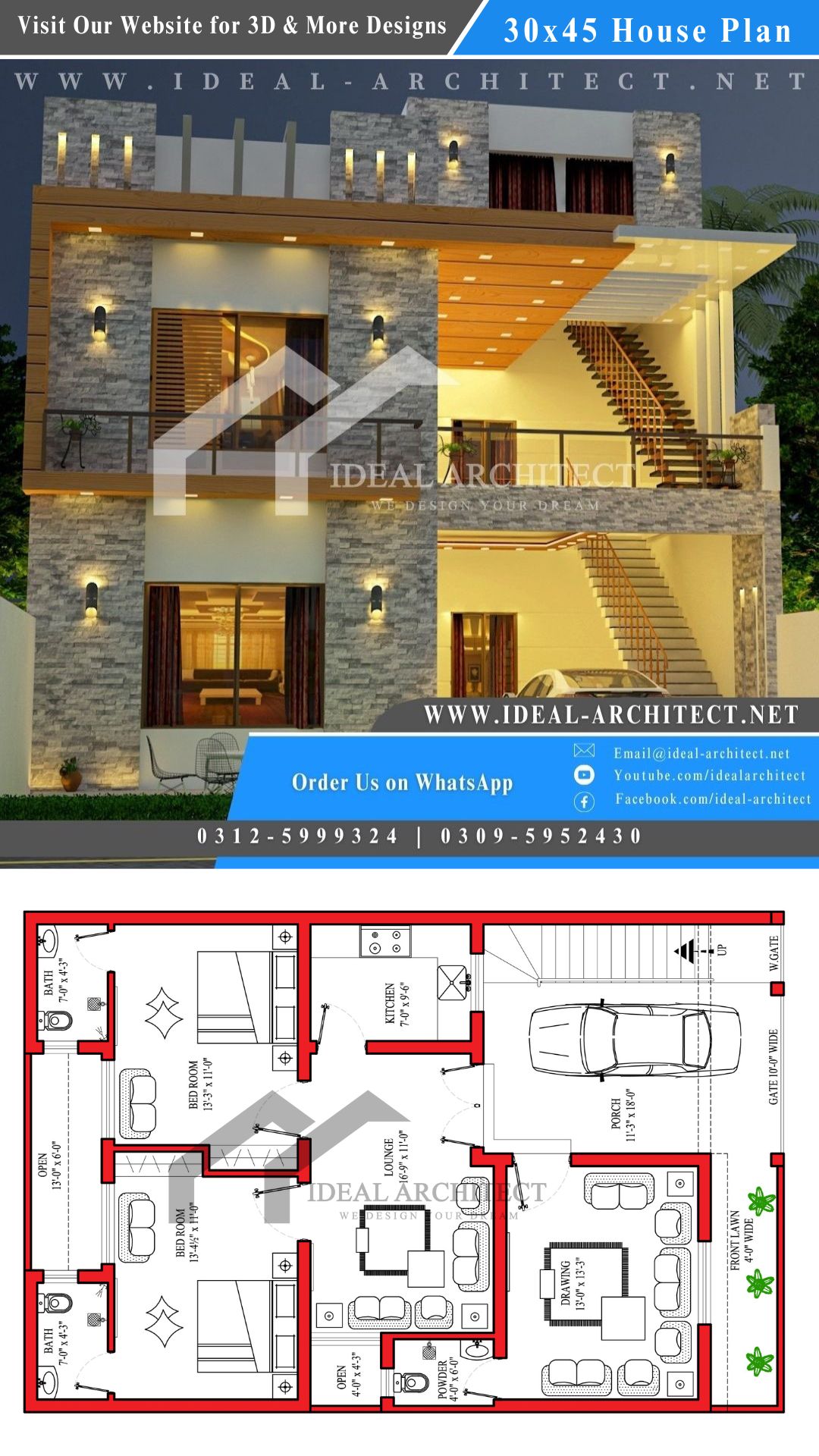
As for the 10 marla front elevation itself, it sits in a balanced middle ground between classic and modern — not too plain, not too heavy. The main facade is built from a warm, light-toned surface that shifts through different shades across the day — soft in the morning, sharp under the afternoon sun, and golden by evening. A central feature — whether a heavy projecting frame or an arch-based composition — gives the facade weight and depth, while the upper level stays lighter and recessed so the building never feels bottom-heavy.
Material choices in this 35×70 house design are made strategically — premium materials like CNC screens, wrought-iron gates, or timber cladding go exactly where visual impact matters most, while the main body of the facade uses simpler, cost-effective plaster or stucco. This approach gives the house a genuinely premium look without spending the entire budget on the facade alone.
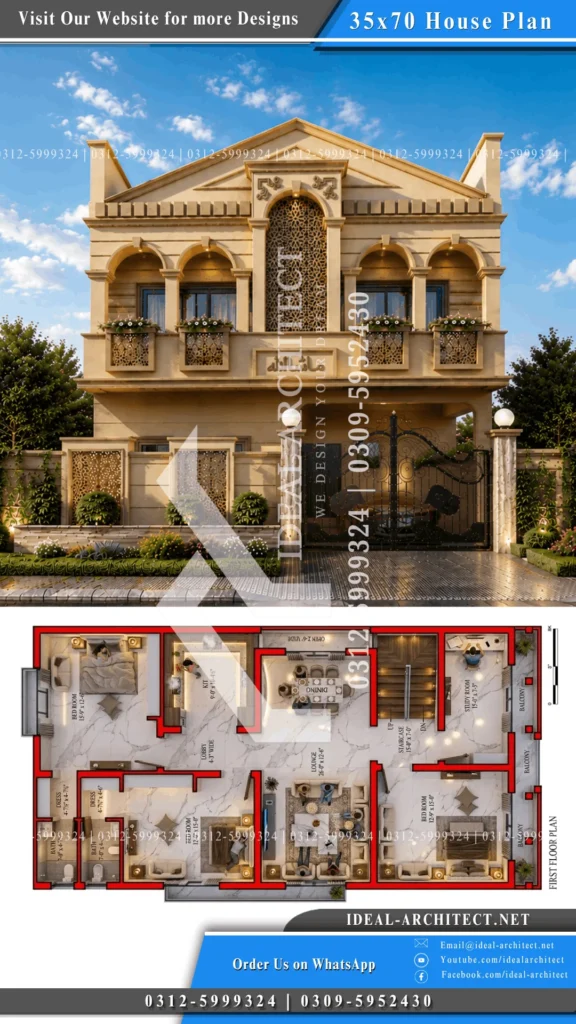
At night, the lighting on this 10 marla house map 35×70 works across three layers — ambient lighting that lights up the porch and driveway, accent lighting that highlights feature walls and arches, and architectural lighting that keeps the roofline and upper walls visible against the night sky. All exterior lighting should be weatherproof, which matters a great deal given Pakistan’s monsoon season and dust conditions.
The best way to judge this entire 10 marla house plan 3d is to look at it under both lighting conditions — day and night — since most guests arrive in the evening, and the elevation needs to hold up just as well after dark as it does in daylight.
Exterior Materials Table
| Material | Location | Key Advantage |
|---|---|---|
| Textured Stone / Porcelain Cladding | Main frame and boundary columns | Zero maintenance, premium matte finish |
| WPC / Timber Cladding | Feature wall and porch ceiling | UV resistant, monsoon-stable |
| Cream Porcelain Cladding | Upper level walls | Heat reflective, low maintenance |
| Terracotta Roof Tiles | Roofline | Traditional character, strong drainage |
| Anodised Aluminium + Tempered Glass | Windows and doors | Wind resistant, rust-free |
| Metal Framed Timber Gate | Boundary main gate | Security with design continuity |
| CNC Cut Aluminium Screens | Arches and balconies (for Islamic/Spanish styles) | Rust-free, weather resistant |
For families who’d rather move away from Contemporary Modern toward a spanish front elevation 10 marla, the same structural massing carries over — only the material palette shifts: charcoal stone becomes terracotta cladding, flat window openings become arched, and timber panels turn into carved plaster or tile detailing. Both directions are equally valid — the only real difference is the emotional register, one precise and sophisticated, the other warm and characterful.